
Why Night Vision Matters for Commercial Security Cameras
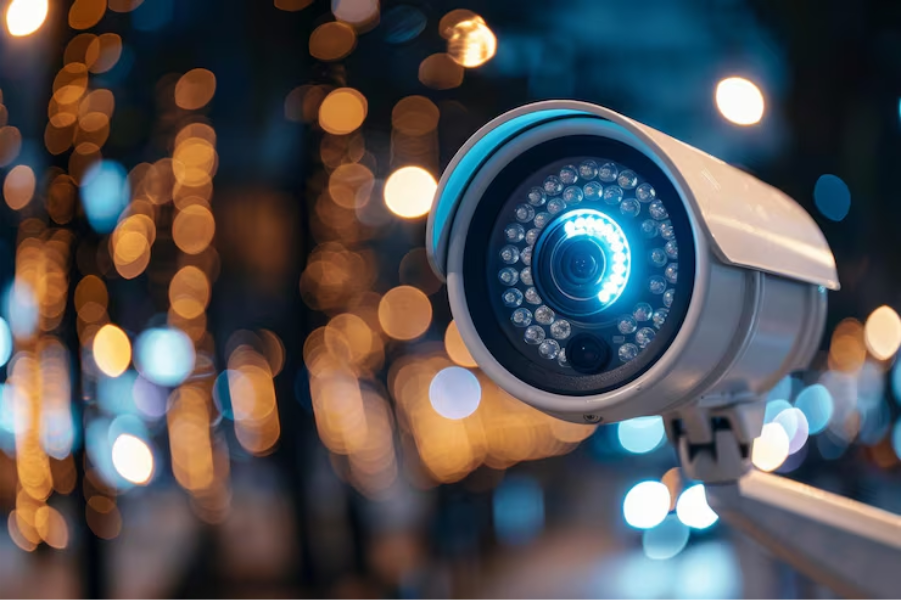
Business security doesn't clock out when your staff go home. Many of the incidents that hurt a business most — break-ins, vandalism, and unauthorized access — happen after the lights go off. That's exactly why night vision belongs at the centre of any commercial security camera plan.
Good night vision lets your cameras keep working in the dark. It captures clear footage when there's little or no light, so you can watch your property around the clock and hold usable evidence if something goes wrong. For an owner or facility manager, that's the difference between a grainy shadow and a recording the police can actually use.
Reliable surveillance is about more than recording video. It's the confidence that your building, staff, equipment, and inventory stay protected overnight. At Maxemum Security, businesses across Canada plan camera systems built to perform in both daylight and darkness — not just one or the other.
What are the benefits of night vision commercial security cameras?
Night vision commercial security cameras let a business monitor its property in darkness and capture clear footage after hours, when most break-ins and vandalism happen. The main benefits are round-the-clock coverage, stronger evidence for police and insurance claims, safer night shifts for staff, and dependable monitoring of parking lots, entrances, and outdoor storage.
This guide explains how the technology works, where businesses gain the most, and the field-tested details — placement, lens choice, weatherproofing, and maintenance — that separate a system that works from one that only looks the part.
Why Low-Light Conditions Put Businesses at Risk
Most commercial properties are not brightly lit overnight. Parking lots, storage yards, loading docks, warehouses, and entrances usually run on minimal lighting to keep costs down. Standard cameras struggle in these conditions and often deliver footage you can't use.
The timing of crime makes this matter. Non-residential properties are more likely to be broken into at night than during the day, and for retail premises the risk concentrates in overnight and weekend hours when stores sit empty — a pattern consistent across FBI burglary data and decades of criminology research. Empty buildings, multiple entry points, and stored goods make closed businesses an easy target.
In Canada, the pressure is real even as the headline numbers ease. Statistics Canada reported that breaking and entering fell about 11% in 2024, to roughly 121,000 incidents nationwide. That's welcome news — but a lower count doesn't help the business that gets hit, and property crime still runs in the hundreds of thousands of incidents a year.
Night vision security cameras are built for exactly these low-light hours. They keep recording when visible light drops toward zero, so you always have footage when you need it. Clear night-time video speeds up investigations, sharpens response, and gives you real evidence if a crime occurs.
| Feature | Standard Camera | Night Vision Camera |
|---|---|---|
| Low-light image | Poor, often unusable | Sharp and detailed |
| Complete darkness | No image | Clear infrared image |
| Evidence quality | Limited | High |
| Outdoor monitoring | Limited | Excellent |
| After-hours coverage | Weak | Reliable |
How Night Vision Technology Works
Night vision cameras see what your eyes can't. They pull detail out of darkness using imaging technology designed for low and no-light conditions.
Most infrared security cameras use infrared (IR) LEDs arranged around the lens. These emit IR light that people can't see but the camera's sensor can, producing crisp black-and-white footage even in total darkness. The two common IR wavelengths — 850nm and 940nm — trade off range against visibility: 850nm reaches farther but shows a faint red glow at the camera, while 940nm is fully invisible but has shorter range. Which one fits depends on whether you want the camera to be discreet or to cover more distance.
Some systems use colour night vision instead. Rather than flipping straight to black and white, these cameras use large, sensitive sensors and wide apertures to hold colour in dim light. Colour matters for identification — a suspect's red jacket or a vehicle's colour is far more useful to investigators than a grey silhouette.
Two specs quietly decide how well a camera performs after dark. The lux rating tells you the lowest light level a camera can still image in; a lower number means better low-light performance. Sensor quality — the physical size and quality of the image sensor — matters more than raw megapixels here, because a larger sensor gathers more light per pixel and produces cleaner night footage.
Wide Dynamic Range (WDR) is the third piece. It balances bright and dark areas in the same frame, which is critical in commercial settings where a camera faces a dark lot but also a bright doorway, headlights, or a lit sign. Without WDR, the bright spots blow out and the dark areas disappear — and that's usually where the problem is.
| Infrared Night Vision | Colour Night Vision |
|---|---|
| Black-and-white image | Full-colour image |
| Works in complete darkness | Needs some ambient light |
| Longer range | Shorter range |
| Great for perimeters and total-dark zones | Better for identifying people and vehicles |
Better After-Hours Monitoring Reduces Security Risks
You can't watch your property every hour of the day. Cameras cover that gap, keeping eyes on the building long after everyone has left.
Strong after-hours business security catches unusual activity before it escalates. Cameras record someone testing a door, a vehicle rolling into a restricted lane, or movement near valuable equipment — the early signals that matter.
Common overnight uses include:
Watching delivery and receiving entrances after close.
Covering parking lots once the lot empties out.
Recording activity around storage areas and yards.
Protecting outdoor equipment and inventory left on site.
Continuous visibility does two jobs at once: it discourages people who'd rather not be filmed, and it keeps a record when something does happen.
Clear Evidence Makes Investigations Easier
Footage is only worth having if you can use it. Video quality decides whether a recording helps or just frustrates everyone reviewing it.
Dark, blurry clips make it hard to identify faces, clothing, licence plates, or vehicles. Sharp night vision changes that, giving investigators details they can act on. This is where lens selection earns its keep: a wide-angle lens covers a broad area but shrinks distant detail, while a narrower lens reads a licence plate at the far end of a lot. Matching the lens to the job — coverage versus identification — is one of the most common decisions a good installer gets right and an amateur gets wrong.
Better evidence supports:
Police investigations.
Insurance claims.
Internal workplace investigations.
Identifying repeat offenders.
The financial stakes are climbing, especially outdoors. The Insurance Bureau of Canada reported that auto theft insurance claims hit a record of about $1.5 billion in 2023, up 19% from the year before. For any business with a parking lot, fleet, or customer vehicles on site, clear overnight footage of those areas directly supports claims and recovery.
Improved Employee Safety During Late Operating Hours
Plenty of businesses run well past dark. Restaurants, hospitals, hotels, retailers, manufacturers, and transport companies all keep people working overnight, and those staff deserve protection.
Night vision surveillance helps by covering entrances, exits, parking areas, and employee-only zones through the night. A few real examples:
Healthcare: cameras at ambulance entrances and near medication rooms protect staff and support patient safety during quiet overnight hours.
Hotels: coverage of guest entrances, service corridors, and parking keeps both guests and late-shift employees safer.
Manufacturing: monitoring hazardous work zones and night-shift areas helps confirm safety procedures and respond quickly to incidents.
If something happens, recorded footage shows the sequence of events and helps emergency responders make faster decisions. Staff also simply feel safer knowing the system stays active after dark.
Protecting Outdoor Areas
Outdoor spaces are harder to secure than indoor ones, and night is when they're most exposed.
Parking lots, loading docks, storage yards, and perimeters deal with shifting light all night — passing headlights, security lamps, shadows, and weather. Quality outdoor security cameras hold image clarity through those changes instead of washing out or going dark.
Weather is a real factor. Rain, snow, fog, and even spider webs across a lens scatter infrared light and can blind a camera at night. Cameras in exposed locations need a weatherproof housing — look for an IP66 or IP67 rating — plus shielding from direct precipitation where possible.
Infrared reflection trips up more outdoor installs than anything else. IR light bounces off nearby walls, signs, glass, and shiny surfaces, flaring the image and hiding what's behind the glare. Mounting cameras away from reflective surfaces, and angling them to avoid bouncing IR straight back, keeps the picture clean.
Blind spots are the quiet failure. A camera aimed slightly wrong, or blocked by a pillar, a parked trailer, or a growing tree, leaves a gap right where you assumed you had coverage. This is why placement is a design decision, not an afterthought.
Outdoor coverage should include:
Customer and staff parking areas.
Shipping and receiving zones.
Perimeter fencing and gates.
Outdoor storage and equipment.
Emergency exits.
There's good evidence this pays off. A 40-year systematic review of CCTV research found that cameras produce a real, if modest, reduction in crime overall — and the single largest and most consistent effect appears in car parks, where monitored camera schemes cut crime by roughly a third. Parking areas are precisely where night vision and smart placement matter most.
The Role of Low-Light CCTV in Business Protection
Not every property goes pitch black at night. Many have some light from streetlamps, signage, or neighbouring buildings.
This is where low-light CCTV shines. These cameras make the most of whatever ambient light exists, using sensitive sensors to hold detail instead of dissolving into noise.
Rather than grainy static, a good low-light sensor captures usable detail in dim conditions, which improves facial recognition and object identification. For businesses in urban areas, low-light technology often delivers excellent results without paying to upgrade site lighting.
Supporting 24/7 Surveillance
Threats don't keep business hours, so your cameras shouldn't either.
Reliable 24/7 surveillance means continuous monitoring, day and night, with no gap at the handover. Modern commercial video surveillance blends daytime colour recording with automatic night vision, switching smoothly as light fades. WDR does its most important work during these transitions — dusk and dawn — when mixed light would otherwise wreck the image.
Round-the-clock coverage helps businesses by:
Monitoring entrances at all hours.
Recording deliveries outside normal hours.
Protecting inventory overnight.
Capturing unexpected incidents whenever they occur.
Continuous recording also builds a complete timeline you can review later, which is often what makes an investigation possible.
Reducing False Security Gaps
Some owners assume good exterior lighting is enough on its own. Lighting helps, but it can't replace surveillance.
In fact, bright lights can work against a standard camera, throwing shadows and glare that ruin the shot. Night vision is designed to handle these conditions and fill the gaps lighting leaves behind.
The strongest setup treats lighting and cameras as partners, not substitutes. Good lighting deters and improves colour capture; night vision guarantees you still see clearly when lighting fails or falls short.
Modern Night Vision Technology
Night vision has moved well beyond simply "seeing in the dark." Today's AI security cameras add a layer of understanding on top of the image, which matters most overnight when no one is watching a monitor.
AI-powered analytics let a camera tell the difference between things that matter and things that don't. Instead of alerting on every shadow, cloud, or passing cat, smart surveillance systems focus on real events:
Human detection flags a person in a restricted area after hours, while ignoring wind-blown debris.
Vehicle detection notices a car entering a lot or loading zone at 3 a.m.
Licence plate recognition (LPR) captures and logs plates at entrances and exits — useful for parking control, deliveries, and investigations.
Motion analytics learn normal patterns and highlight the unusual, like movement along a fence line that's quiet every other night.
These tools connect to smart alerts and mobile notifications, so the right person gets a message the moment something looks wrong — with a clip attached, not just a buzz. Remote monitoring lets an owner or manager check any camera from a phone or laptop, whether they're across town or across the country.
There's a reason active, intelligent monitoring outperforms a camera that only records: the same CCTV research shows that schemes with active monitoring produce larger crime reductions than passive systems that no one watches. AI brings that active layer to businesses that can't staff a monitoring desk around the clock.
Choosing the Right Night Vision Camera
Every property is different. Camera choice should follow your layout, hours, and the specific areas you need to protect — not a one-size-fits-all box.
Features worth weighing:
Infrared viewing distance, matched to the actual area.
Resolution high enough to identify, not just detect.
Lens and viewing angle suited to the space.
Lux rating for low-light performance.
Wide Dynamic Range for mixed lighting.
Weatherproof housing (IP66/IP67) for outdoor units.
Motion detection and analytics.
Remote viewing.
Secure video storage.
| What to Check | Why It Matters in a Commercial Setting |
|---|---|
| Lux rating | Lower numbers mean clearer footage in dark lots and yards |
| IR distance | An IR range too short leaves the far end of a space unseen |
| Lens / field of view | Balances wide coverage against reading faces and plates |
| WDR | Prevents blown-out doorways and headlights at night |
| Sensor size | Larger sensors gather more light for cleaner night images |
| IP rating | Keeps rain, snow, and dust from degrading outdoor cameras |
A key detail installers get wrong: matching IR distance to the space. A camera with a 30-metre IR range mounted to watch a 100-metre yard will simply go dark past its reach, leaving the most important area invisible. Choosing to spec fewer, better-placed cameras usually beats scattering many weak ones.
Working with an experienced provider helps here. Good commercial CCTV installation isn't just mounting hardware — it's positioning each camera for coverage, angle, and lighting so the system actually performs when tested.
Common Night Vision Camera Mistakes
Most night vision failures aren't equipment problems. They're installation and upkeep problems. Here are the ones we see most often:
Cameras mounted too high. A camera placed too high captures the tops of heads, not faces. Lower, well-angled placement gets identifiable footage.
Reflective surfaces nearby. Walls, glass, signs, and shiny doors bounce IR straight back, flaring the image. Keep cameras clear of reflective surfaces.
Dirty lenses. Dust, cobwebs, and grime scatter infrared and blur the picture — a leading cause of poor night footage, and an easy fix.
Trees and obstructions blocking IR. A branch, banner, or parked trailer that creeps into view over time blocks the infrared and creates a blind spot no one notices until it's needed.
Wrong IR distance. An infrared range that doesn't match the space leaves the far end dark.
Poor viewing angles. Cameras aimed into headlights or the rising sun wash out at exactly the wrong moment.
No maintenance. Cameras drift, housings fog, and firmware ages. Without routine checks, small issues quietly become coverage gaps.
The takeaway: professional installation and a regular maintenance schedule protect the investment you've already made.
Protecting Your Surveillance System
Your cameras watch the property — but who's watching your cameras? A surveillance system is connected technology, and if it isn't secured, it becomes a way in rather than a layer of defence. Unsecured cameras have been hijacked to spy on businesses or knocked offline right before an incident.
Protecting commercial property surveillance comes down to a few habits:
Encryption keeps video secure as it travels and while it's stored, so footage can't be intercepted or read if someone gets access.
Multi-factor authentication (MFA) stops a stolen password alone from unlocking your cameras.
Secure cloud storage protects recordings even if on-site equipment is stolen or damaged during a break-in.
Firmware updates patch security flaws as manufacturers find them — skipping them leaves known holes open.
User permissions limit each person to what they need, so a single account can't expose the whole system.
Secure remote viewing ensures the convenience of checking cameras from your phone doesn't quietly become a back door.
Change default passwords on day one, keep firmware current, and treat your surveillance network with the same care as any other business system holding sensitive data.
Common Business Locations That Benefit from Night Vision
Night vision earns its place across nearly every industry, though the priorities shift by site.
Retail stores watch storefronts, cash-handling and till areas, parking lots, and delivery entrances after closing — the hours when shoplifting turns into break-ins.
Warehouses cover inventory storage, loading docks, forklift-traffic lanes, and vehicle movement during overnight operations.
Office buildings monitor employee entrances, reception and visitor-management points, hallways, and restricted areas like server rooms when the building is empty.
Healthcare facilities keep continuous watch on ambulance entrances, medication rooms, and patient and visitor areas, supporting both security and staff safety.
Hotels cover guest entrances, parking lots, and service corridors to protect guests and late-shift staff alike.
Manufacturing and industrial sites supervise production floors, outdoor equipment, hazardous work zones, and perimeter fencing through overnight shifts.
Each environment carries its own risks, but the need for dependable visibility after dark stays constant.
Smart Integration Improves Security Management
Modern cameras do far more than record. They work best as one part of a connected system.
Night vision cameras can tie into access control systems, commercial alarm systems, motion sensors, and mobile apps. When these tools share information, a single event can trigger a coordinated response — a door forced after hours can pull up the nearest camera, start recording, and push an alert at the same time.
That integration means you're not scrubbing through hours of footage. You jump straight to the clip tied to a specific event, which sharpens response and makes day-to-day management far less painful.
The evidence backs this up: CCTV research consistently finds that cameras paired with other security measures reduce crime more than cameras deployed alone. A camera is strongest as a layer, not a lone solution — which is why pairing it with [video surveillance] monitoring, alarms, and access control matters. For many businesses, adding professional [security monitoring] is what turns recorded footage into a real-time response.
Long-Term Value for Businesses
Night vision pays off well beyond stopping crime.
Reliable surveillance trims financial losses, sharpens operational awareness, supports employee safety, and strengthens your insurance documentation. Clear recordings also help settle customer disputes, investigate workplace incidents, and verify deliveries made outside normal hours.
Scalability is part of that long-term value. A well-planned system lets you add cameras, cover a new dock, or bring a second location onto the same platform without starting over — so security grows with the business instead of being ripped out and replaced.
None of it lasts without upkeep. Routine maintenance — cleaning lenses, testing night performance, checking housings — and regular firmware updates keep the system reliable and secure year after year. Over time, a dependable surveillance system stops being just a security purchase and becomes part of how the business runs.
Frequently Asked Questions
Do night vision cameras work in complete darkness?
Yes. Most infrared cameras use invisible infrared light to capture detailed black-and-white images even when there's no visible light at all.
Can night vision cameras record colour footage?
Some cameras record colour in low light using large, sensitive sensors. When light drops too low, many systems switch automatically to black-and-white infrared for clarity.
Is night vision useful for small businesses?
Yes. Businesses of every size gain from better overnight monitoring, stronger evidence, and greater property protection. Even one or two well-placed cameras make a difference.
How far can infrared cameras see at night?
It depends on the model. Commercial infrared cameras range from a few metres to well over 100 metres — but the rated distance only helps if it matches the area you're covering.
Are infrared cameras better than colour night vision?
is simply "better" — they suit different jobs. Infrared reaches farther and works in total darkness, which is ideal for perimeters and unlit zones. Colour night vision needs some ambient light but captures detail like clothing and vehicle colour, which helps with identification. Many sites use both.
Do all commercial cameras have night vision?
No. Night vision is a specific feature, and quality varies widely between models. If after-hours coverage matters — and for most businesses it does — confirm the low-light and infrared specs before buying rather than assuming.
How often should security cameras be serviced?
Plan on a professional check at least once or twice a year, plus quick lens cleaning as needed. Servicing should include testing night performance, inspecting housings, confirming storage, and applying firmware updates.
Can weather affect infrared cameras?
Yes. Heavy rain, snow, and fog scatter infrared light and can reduce night-time clarity. Weatherproof housings (IP66/IP67), good placement, and shielding from direct precipitation help maintain performance outdoors.
Can AI detect people at night?
Yes. AI security cameras can distinguish people and vehicles from harmless movement in low light, cutting false alerts and sending faster, more accurate notifications when something genuinely needs attention.
What lighting is best for commercial night surveillance?
A mix works best. Moderate, even lighting improves colour capture and deters intruders, while infrared or low-light cameras cover the areas lighting can't reach. Avoid harsh, uneven lighting that creates glare and deep shadows.
Should every outdoor camera have night vision?
For most commercial properties, yes. Outdoor areas are where after-hours crime concentrates, so any outdoor camera without dependable night vision leaves a real gap in coverage.
Final Thoughts
After years of assessing commercial sites, one pattern holds: the trouble almost always finds the dark corners — the unlit lot, the quiet loading dock, the side entrance no one thinks about at 2 a.m. Night vision exists to close those gaps.
Clear after-hours footage does the quiet, important work: it deters people who'd rather not be seen, gives police and insurers something real to work with, and helps keep your night-shift staff safe. But cameras only deliver when they're chosen and placed with intent — the right lux rating for the setting, a lens matched to the distance, weatherproofing that survives a Canadian winter, and mounting that avoids glare and blind spots.
The best advice I can give is to start with an assessment, not a shopping list. Walk your property after dark and look for the shadows. Match each camera to the risk in front of it, tie the system into your alarms and access control, and keep it maintained so it still performs a year from now.
If you'd like a clear-eyed look at where your property is exposed overnight, the team at Maxemum Security can assess your site, map the blind spots, and recommend a night vision setup built around your building and your risks — not a generic package. Reach out when you're ready, and take the guesswork out of protecting your business after dark.
